Drones are everywhere—and so are the risks. They can spy, disrupt critical infrastructure, and enable precision attacks. A fast-growing airborne threat is here. And we have the answer.
Invest in Europe’s security,
so we can safeguard its future together.
Europe is witnessing a rapid escalation in drone-related incidents, outpacing the ability of legislators to respond and exposing critical vulnerabilities across the continent. Critical infrastructure operators still lack effective, non-destructive counter-UAS solutions, while municipalities and smart cities face increasing pressure to secure low-altitude urban airspace. At the same time, autonomous systems powered by AI are set to redefine next-generation airspace security, driving a major technological shift. EAGLE.ONE stands at the intersection of robotics, AI, and urban security — a sector poised for significant expansion over the coming decade.
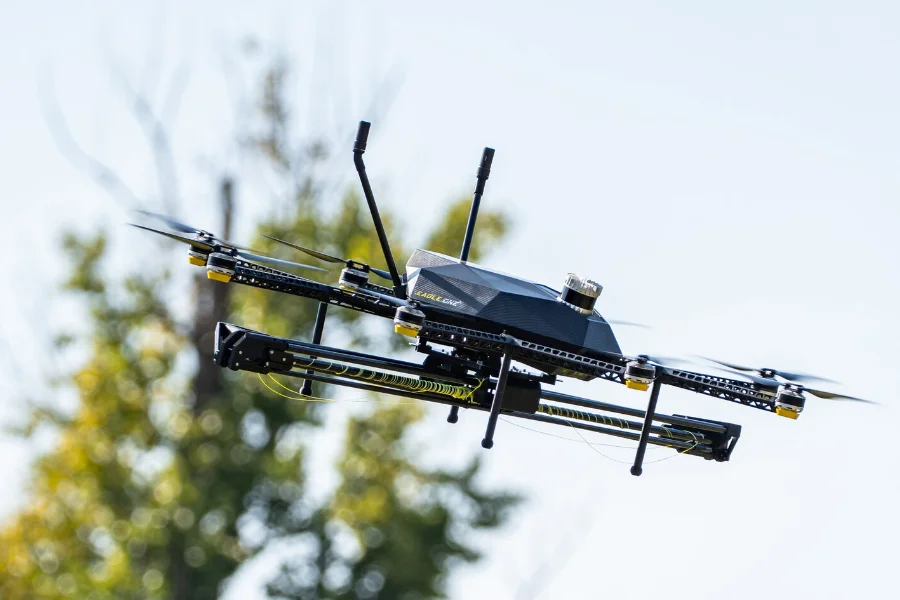
The EAGLE.ONE Drone Hunter is an advanced, fully-autonomous aerial system that detects, intercepts, and captures unauthorized drones safely and efficiently. Unlike conventional systems that rely on jamming signals or destructive kinetic strikes, it uses a non-destructive net-capture mechanism coupled with AI-driven flight control, allowing for forensic-grade retrieval of intruder drones.
The system integrates seamlessly with existing RF and sensor detection networks. Once a threat is detected, the Drone Hunter launches from its docking station, tracks the intruder using LiDAR, cameras and onboard AI prediction models, and executes the capture manoeuvre by deploying a net. After interception, it returns the captured drone to its base for further analysis.
Designed for high-end security environments, such as airports, border zones, critical infrastructure and prisons, the Drone Hunter delivers a premium solution: rapid response, full autonomy from take-off through mission completion, modular capture mechanisms, and minimal collateral risk.
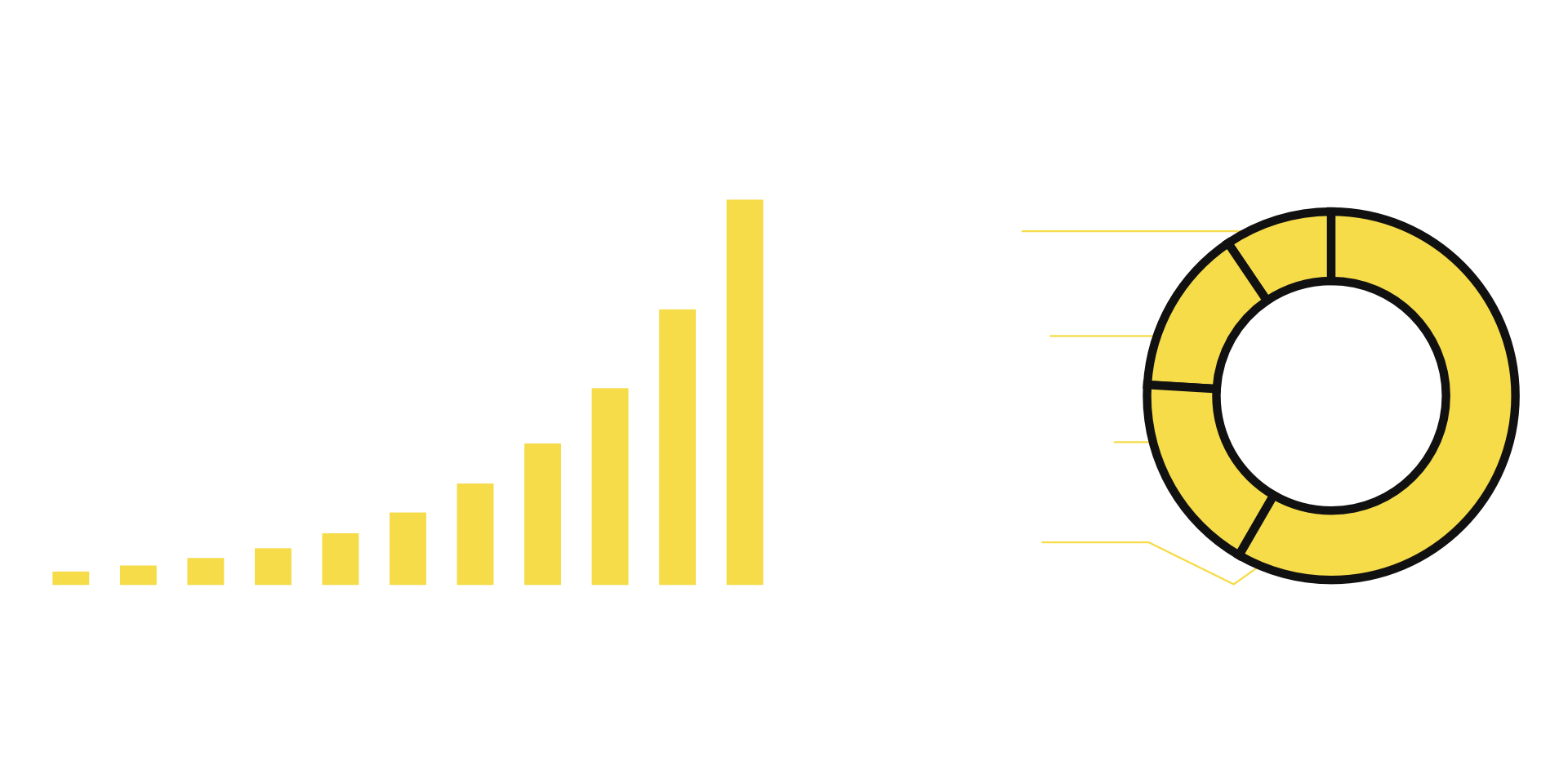
The global anti-drone (or counter-UAV) market is showing strong momentum — estimates suggest it will grow from around USD 2.3-3 billion in 2024 to USD 10-30 billion+ by the early-to-mid 2030s. This expansion is driven by growing threats from unauthorized, commercial and military drones, coupled with increasing investment in detection and neutralization systems.
Key segments include defense, critical infrastructure, border protection, prisons, airports, and major public events — all high-risk zones for drone incursions and thus high-priority for counter-drone deployment. Within these, there’s a rising shift from purely detection systems into autonomous neutralization capabilities (for example jamming, spoofing, directed energy, kinetic intercept) — a trend that aligns precisely with the niche that EAGLE.ONE is targeting.
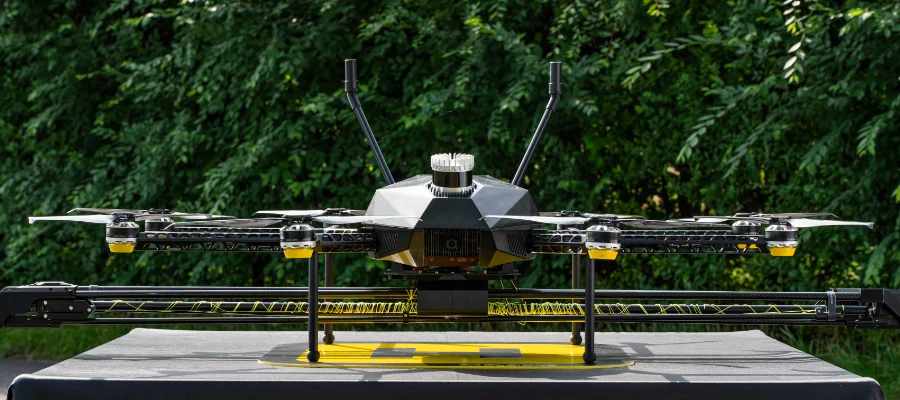
EAGLE.ONE Drone Hunter is powered by one of the most advanced AI systems in the counter-drone field. Its proprietary algorithms combine real-time sensor fusion, trajectory prediction, and adaptive guidance to ensure optimal interception in any scenario.
In comparative testing — 500 simulations across 100 distinct flight trajectories — EAGLE.ONE achieved a flawless 100% success rate, surpassing all major AI-based guidance methods in both accuracy and interception time. The system consistently neutralizes intruders on the first attempt, even in complex or unpredictable flight conditions.
By merging autonomy, speed, and precision, EAGLE.ONE sets a new standard in aerial defense, offering unmatched reliability and efficiency for securing airspace across defense, airport, and critical-infrastructure environments.
| PP | |
|---|---|
| Trajectories | 72 % |
| Successful interceptions (time to first) | 4.40 (32.22 s) |
| Interception accuracy all / first | 1.19 m / 1.23 m |
| LPN | |
|---|---|
| Trajectories | 95 % |
| Successful interceptions (time to first) | 12.65 (19.73 s) |
| Interception accuracy all / first | 0.17 m / 0.03 m |
| GPN1 | |
|---|---|
| Trajectories | 100 % |
| Successful interceptions (time to first) | 10.84 (21.40 s) |
| Interception accuracy all / first | 0.17 m / 0.25 m |
| GPN2 | |
|---|---|
| Trajectories | 100 % |
| Successful interceptions (time to first) | 17.60 (8.15 s) |
| Interception accuracy all / first | 0.18 m / 0.34 m |
| FRPN (ours) | |
|---|---|
| Trajectories | 100 % |
| Successful interceptions (time to first) | 24.38 (5.93 s) |
| Interception accuracy all / first | 0.16 m / 0.04 m |
| Method | Trajectories | Successful interceptions (time to first) | Interception accuracy all / first |
|---|---|---|---|
| PP | 72 % | 4.40 (32.22 s) | 1.19 m / 1.23 m |
| LPN | 95 % | 12.65 (19.73 s) | 0.17 m / 0.03 m |
| GPN1 | 100 % | 10.84 (21.40 s) | 0.17 m / 0.25 m |
| GPN2 | 100 % | 17.60 (8.15 s) | 0.18 m / 0.34 m |
| FRPN (ours) | 100 % | 24.38 (5.93 s) | 0.16 m / 0.04 m |
Intruder drones are captured using a net-based system, minimizing collateral damage and enabling forensic analysis.

Autonomous operation from take-off to landing, including pursuit, interception, and return to base.

Onboard AI predicts target behavior, optimizes interception, and reacts to complex situations in real time.

Open APIs allow seamless integration with existing detection and command-and-control systems.

Built on eight years of in-house research in autonomous systems and drone interception.

Validated through testing and deployments in real-world operational conditions.
Phone
Company
EAGLE.ONE s.r.o., ORG ID: 03947394
Povltavska 5/74, 171 00 Praha 7
