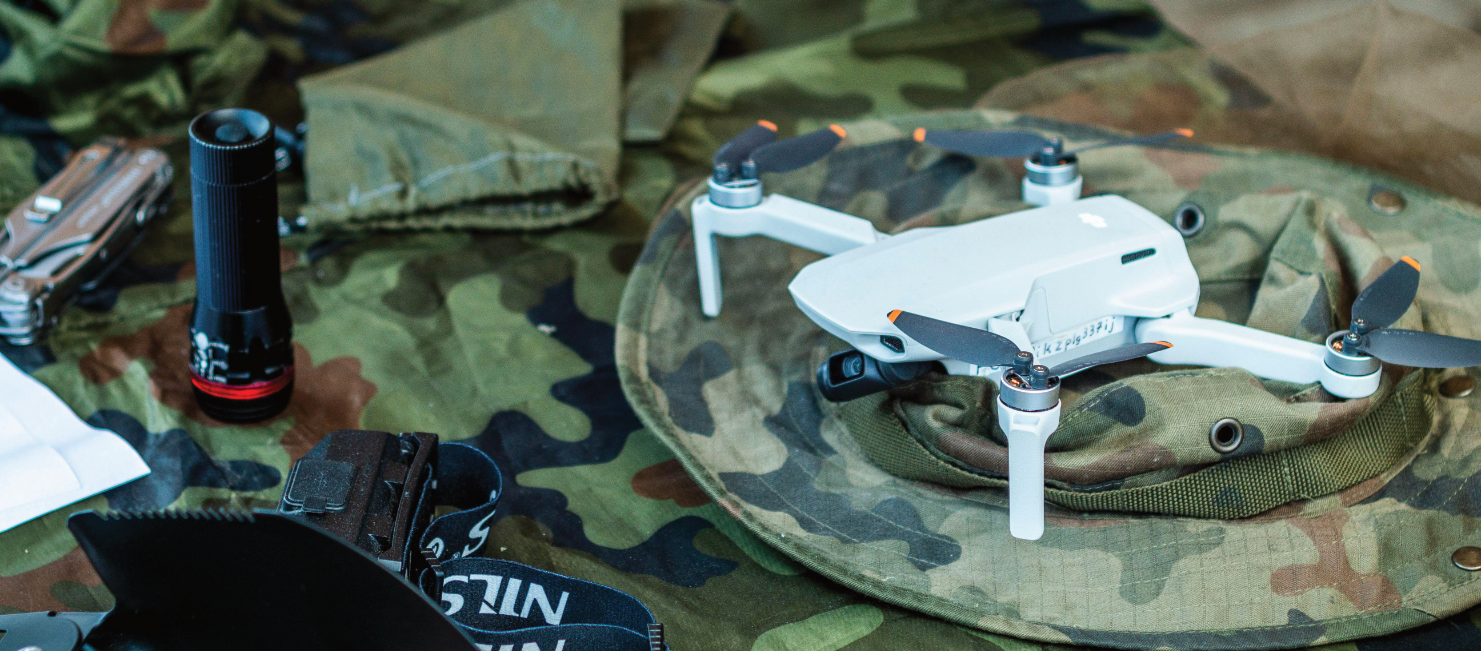
If you follow the war in Ukraine, you’ve seen the videos: FPV drones diving at tanks, chasing cars, and hunting soldiers across open fields. They’re fast, unpredictable, and deadly. And even the best shooters in the world can barely hit them.
A Finnish shotgun world champion, Kim Leppänen, recently demonstrated just how difficult it truly is. On a training range, he set up a simple test: shoot down incoming FPV drones. The result was eye-opening.
You get one second. Maybe two. And that’s it.
Kim tested three situations:
He had equipment most soldiers never see: a specialized shotgun, custom ammunition, thermal optics. Even with all of that, the first round went to the drones.
The difficulty is easy to underestimate. Small and agile FPV drones move with a speed and unpredictability that leaves almost no room to react. For anyone on the ground to notice the threat, assess it and respond in time is incredibly hard. One brief moment decides everything — lose focus for a second, and the drone is already too close.
In the second scenario, when the sun wasn’t blinding him, Kim managed to hit a zig-zagging drone. But it wasn’t a controlled shot. It came down to timing, experience and some luck.
The contrast with real frontline conditions is stark. Many Ukrainian soldiers:
Meanwhile, the drone is piloted by an operator wearing FPV goggles, fully focused and controlling it with precision similar to a video game.
Several points become obvious immediately:
If this is what it looks like on a clean Finnish range, imagine mud, smoke, noise, stress and battlefield chaos.
Frontline soldiers often rely on shotguns because many FPV drones no longer react to electronic jamming. Fiber-optic-guided models ignore it entirely. The last line of defense becomes a weapon many troops barely know how to use.
This test highlights a clear conclusion: counting on humans to reliably shoot down FPV drones is unrealistic. Modern warfare now operates in reaction windows measured in fractions of a second. A guided machine approaching at 150 km/h simply exceeds human reflex capabilities.
🔗 Original article:
https://zpravy.aktualne.cz/zahranici/mate-zlomek-sekundy-mistr-sveta-ve-strelbe-brokovnici-prozra/r~3d3d145cc09911f09af20cc47ab5f122/
Phone
Company
EAGLE.ONE s.r.o., ORG ID: 03947394
Povltavska 5/74, 171 00 Praha 7
