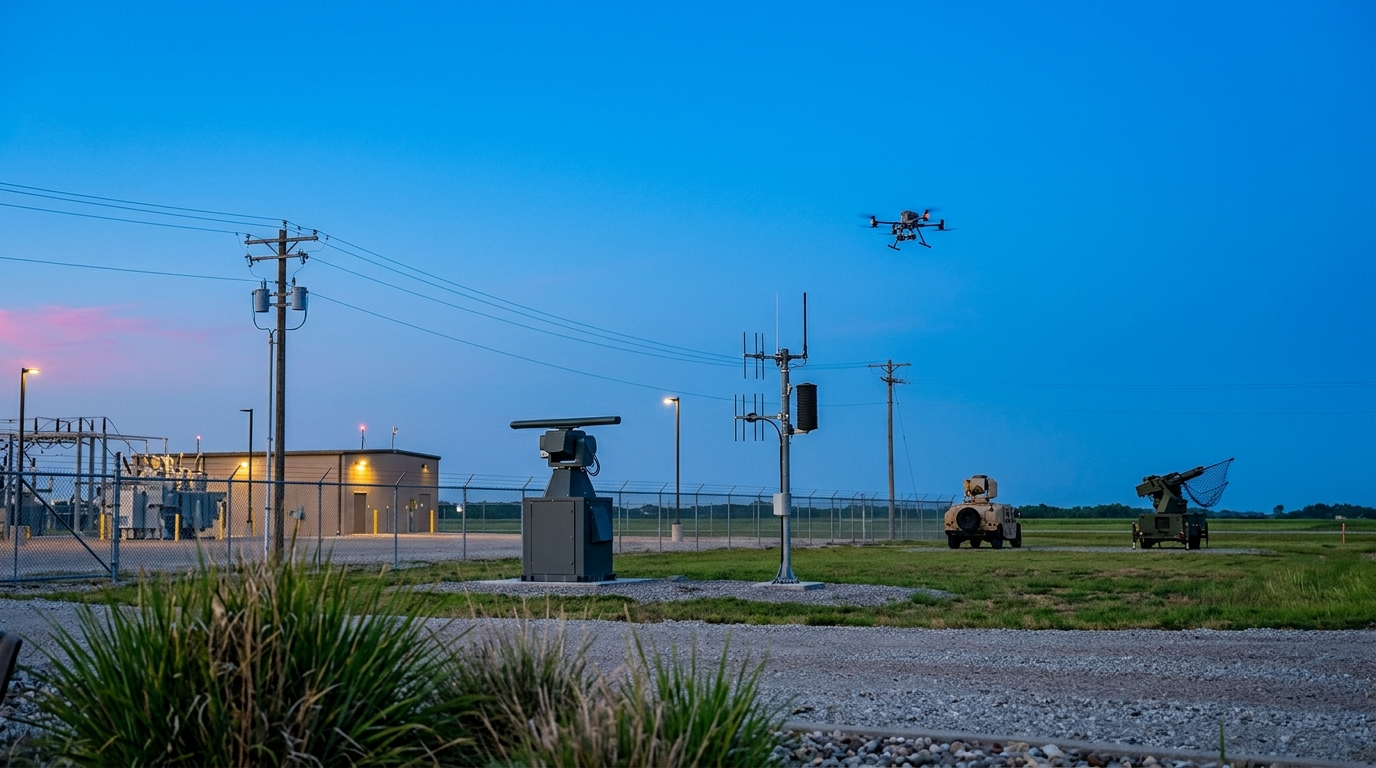
An unauthorized drone does not create a simple problem.
It can appear suddenly, fly low, change direction quickly, or move through a crowded environment. In the first moments, it is not enough to know that something is in the air. You need to understand what it is, where it is going, and whether it creates a real risk.
Each detection method sees only part of the picture.
RF detection can catch communication between a drone and its controller, but it may struggle if the drone flies autonomously or stays radio silent.
Radar can track objects even when they do not transmit anything, but small drones can be hard to separate from birds or background movement.
Optical systems can confirm what operators are looking at, but cameras depend on visibility, weather, light, and line of sight.
None of these methods is bad. None of them is complete.
A layered system combines different signals into one more reliable view.
One layer may detect early activity. Another may track the object. Another may confirm that it is really a drone. Together, they reduce guesswork and help operators make better decisions.
This matters because response is not only about speed. It is also about control, confidence, and context. What works in an open field may not be safe near an airport, above a public event, or close to critical infrastructure.
Layered protection is not about making the system more complicated. It is about making it more useful.
A single layer can miss something. A layered system gives a better chance to understand the situation and respond safely.
Phone
Company
EAGLE.ONE s.r.o., ORG ID: 03947394
Povltavska 5/74, 171 00 Praha 7
